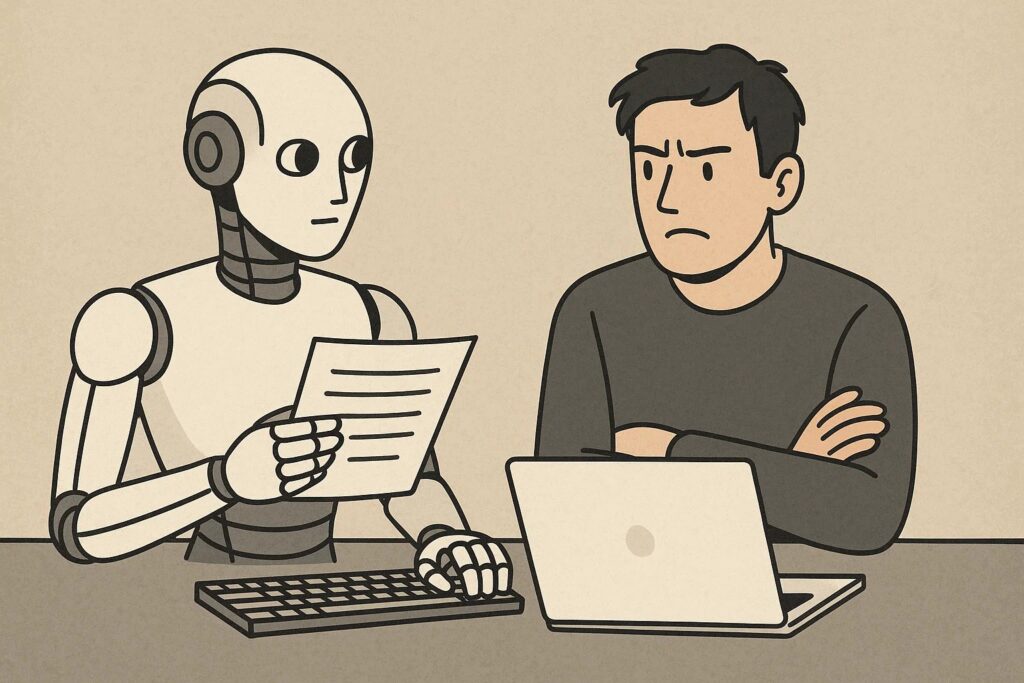
There was a time not too long ago when writing for the web meant hours of research, late-night brainstorming sessions, and a blinking cursor on a blank screen. Today, the scene has changed drastically. The introduction of artificial intelligence into the content writing space has brought with it a mix of intrigue, anxiety, and opportunity. Especially for freelance writers, AI presents a new frontier—but is it a helpful ally or a looming threat?
A New Era of Content Creation
With the rise of tools like ChatGPT, Jasper, and other language models, businesses now have access to writing solutions that can generate full-length articles in seconds. These tools can analyze data, respond in complete sentences, and even optimize for keywords—all without needing a coffee break.
At first glance, this might seem like the beginning of the end for freelance writers. After all, if AI can write quickly and cheaply, what room is left for human creativity? But dig a little deeper, and the relationship between AI and writers becomes more nuanced.
Understanding AI’s Role in SEO
Search engine optimization (SEO) is a constantly evolving practice, one that depends heavily on content quality, keyword integration, and user experience. AI tools have adapted to this environment by offering data-driven insights that guide writers on how to craft articles that rank.
AI can identify trending topics, suggest headings, and analyze competitors’ performance. This allows for the generation of articles that are technically optimized for search. However, ranking well isn’t only about stuffing in the right keywords. Google and other search engines increasingly prioritize expertise, authority, and trustworthiness (E-E-A-T).
This is where AI still has significant limitations. Machines may be able to mimic tone and structure, but they can’t replicate lived experience, critical thinking, or nuanced opinions—all of which add depth and authenticity to content.
The Case for AI as a Writing Tool
Rather than viewing AI as a replacement, many writers are discovering that it can act as a highly useful tool. AI can:
- Generate content outlines based on SEO goals
- Summarize research findings quickly
- Provide alternate headlines or title suggestions
- Offer feedback on readability and grammar
Used responsibly, these tools enhance a writer’s efficiency without replacing their unique voice. Think of AI not as a ghostwriter but as a research assistant or brainstorming partner.
Where AI Falls Short
Despite its strengths, AI writing lacks originality. Its responses are derivative, based on patterns found in existing content. This means it struggles with:
- Emotional storytelling
- Humor and satire
- Cultural sensitivity
- Unconventional formats
Moreover, AI can produce content that sounds confident but is factually incorrect. This “hallucination” issue is especially risky in niches like health, finance, or law where accuracy is critical. Relying solely on AI for such content can damage credibility and even result in legal repercussions.
Freelancers Who Adapt Will Thrive
The writers who will survive—and even flourish—in this AI-enhanced landscape are those who choose to adapt. Embracing AI doesn’t mean giving up your craft; it means learning how to wield new tools that can amplify your abilities.
Here are some ways freelance writers can future-proof their careers:
- Offer strategic services: Combine writing with content strategy, SEO consulting, or brand voice development.
- Specialize in complex topics: Deep industry knowledge remains irreplaceable by machines.
- Build a personal brand: Clients will seek out writers whose voices and values align with their own.
- Stay current: As AI tools evolve, so should your understanding of them.
The Ethics of Using AI in Writing
As AI-generated content becomes more prevalent, questions about transparency and authenticity come into play. Should clients be told when AI contributed to an article? Is it ethical to pass off machine-written content as your own?
Freelancers must decide where they stand and communicate clearly with clients. In many cases, using AI for ideation or outlining may be fine, but full AI authorship without disclosure can cross ethical boundaries.
Competition or Collaboration?
So, is AI a friend or foe for freelance writers? The answer depends on how you choose to engage with it. Treat AI as a competitor, and you may find yourself struggling to keep up. Treat it as a collaborative tool, and you unlock new levels of productivity, insight, and service quality.
The future of freelance writing isn’t about man versus machine. It’s about how well humans can harness technology to create content that is not only optimized but also meaningful, authentic, and resonant.
In a world increasingly filled with content, it’s the human touch that makes the difference. And that’s something no algorithm can replace.
The written content on this page was generated by ChatGPT.