For centuries, creative writing has been one of humanity’s most treasured forms of expression. Whether penned on parchment or tapped into digital screens, stories have carried our dreams, identities, and cultural truths across generations. From ancient myths to modern fiction, writing has offered a uniquely human lens through which we explore meaning and connection.
But now, that lens is shifting.
A new force—non-human, non-conscious, and built entirely of code—is beginning to co-author this age-old tradition. Artificial intelligence, once the subject of speculative science fiction, is actively participating in the act of storytelling. Algorithms are writing poems. Neural networks are composing short stories. Machine learning models are drafting novels. And as AI continues to evolve, the literary world is faced with an unprecedented question:
What happens to creative writing when the “writer” is no longer human?
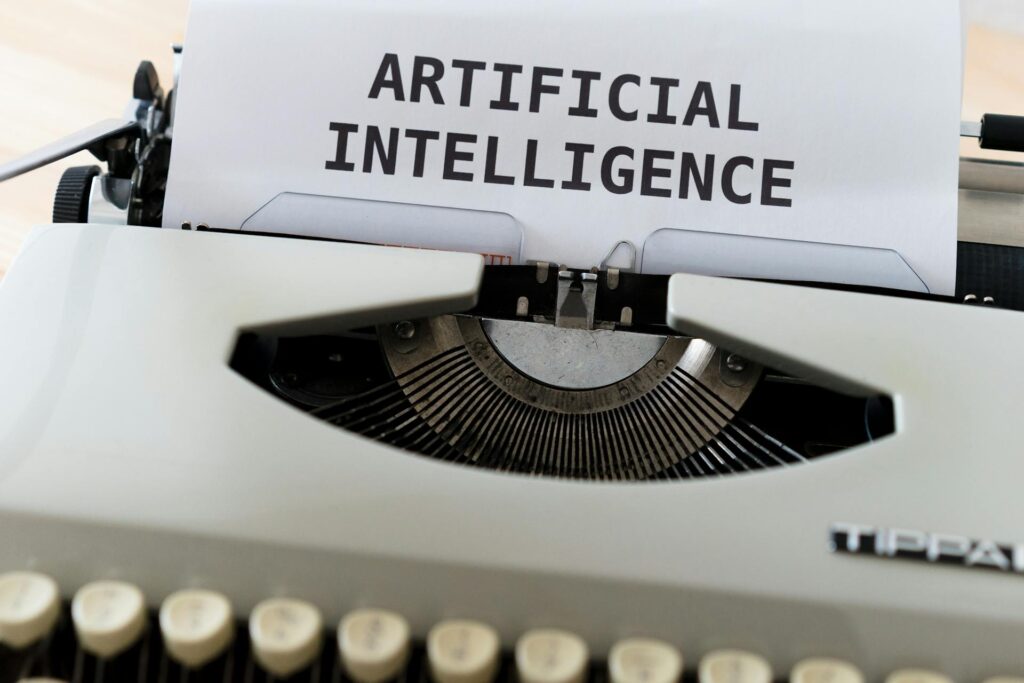
What Is AI-Generated Literature?
AI-generated literature refers to any written work—fiction, poetry, essays, and more—that is created wholly or in part by artificial intelligence. These systems, powered by natural language processing (NLP) and deep learning, are capable of analyzing massive troves of text and generating new content that resembles human writing in tone, structure, and style.
Advanced models like OpenAI’s GPT-4, Google’s Bard, and other large language models (LLMs) are now being used to create stories that can mimic everything from classical literature to contemporary genre fiction. Some authors use AI as a co-creator, feeding it prompts and editing its output; others experiment by allowing AI to generate entire chapters or even books.
In 2021, an AI-generated short story made it into The Guardian. Since then, AI-authored novels have appeared on Kindle, and AI poetry has been published in literary journals—proving that machine-generated creativity is not just a novelty, but an emerging literary force.
How Does AI Write?
At the heart of AI-generated literature lies the concept of language modeling. These models are trained on vast libraries of text—from Wikipedia and news articles to Shakespearean plays and Reddit threads. By analyzing patterns in this data, the AI learns how language works: how sentences are constructed, how characters speak, how emotions are described, and how plotlines evolve.
When you provide a prompt—say, “A lonely robot finds a flower in a desert”—the AI predicts the next word, then the next sentence, and so on. It doesn’t understand the story the way a human does. It doesn’t feel sadness or joy. But it draws on its training to generate prose that simulates meaning and emotion with remarkable fluency.
The result? Surprisingly coherent narratives that can spark imagination, inspire ideas, and even resonate emotionally with readers.
Benefits of AI in Creative Writing
Despite skepticism, AI is proving to be a powerful tool for writers and creators. Here are several ways it’s reshaping the writing process:
1. Overcoming Writer’s Block
Every writer knows the dread of a blank page. AI can generate suggestions, continue half-written sentences, or offer creative prompts that unblock stalled narratives.
2. Idea Generation and Brainstorming
Need a plot twist? A metaphor? A character background? AI can provide hundreds of unique suggestions in seconds, helping writers explore directions they may never have considered.
3. Drafting and Outlining
AI can assist in drafting sections of a story or outlining a plot based on a short summary. It can even propose chapter structures for complex narratives.
4. Language Support for Non-Native Speakers
For writers who speak English as a second language, AI tools can serve as grammar checkers, style advisors, and even translation aids—democratizing access to literary creation.
5. Interactive Storytelling
Some platforms now use AI to allow readers to influence the direction of a story in real-time, blurring the lines between reader, author, and machine.
The Ethical and Creative Dilemmas
As with all technological advances, AI-generated literature comes with important challenges and controversies:
1. Authenticity vs. Imitation
Can a machine-generated story be truly original, or is it simply rearranging existing language? Critics argue that AI lacks intent and self-awareness—two traits often associated with genuine artistic expression.
2. Ownership and Copyright
Who owns an AI-generated story? The programmer? The user who prompted it? The company that trained the model? The legal framework for AI-authored content remains murky and largely untested.
3. Quality Control
AI can produce elegant prose—but it can also generate clichéd, incoherent, or ethically problematic content. Without human oversight, AI-generated writing may inadvertently reinforce stereotypes or create misleading narratives.
4. Job Displacement
Some fear that AI will replace human writers, especially in commercial writing fields like advertising, journalism, and content marketing. While AI can accelerate production, it raises valid concerns about creative job security.
Can AI Be Truly Creative?
This is the heart of the debate. Creativity is often thought of as an innately human trait—something born of experience, emotion, and intuition. AI does not dream. It doesn’t suffer heartbreak or feel awe. So how can it be considered creative?
The answer may lie in how we define creativity itself. If creativity is the ability to generate novel and meaningful ideas, then AI can be seen as a creative collaborator. It may not invent from nothing, but it recombines existing ideas in ways that spark new inspiration—just like a jazz musician riffing on a theme.
Some authors have even embraced AI as a muse. Novelist Robin Sloan has described working with AI as “writing with a machine whispering in your ear.” In this view, AI is not replacing the writer—it’s expanding their range.
The Future: Collaboration Over Competition
Rather than viewing AI as a threat, many in the literary world are starting to see it as an opportunity for reinvention.
In Creative Writing Education:
AI can help students learn structure, grammar, and stylistic variation. It can serve as a practice partner or provide examples of literary techniques in real-time.
In Independent Publishing:
Self-published authors are already using AI to brainstorm ideas, improve dialogue, and polish grammar—streamlining the often overwhelming process of writing a book.
In Literary Experimentation:
Writers and artists are pushing the boundaries by co-writing with AI, creating hybrid texts, and exploring the philosophical implications of machine-made art.
A New Literary Frontier
AI-generated literature is not the end of creative writing—it’s the beginning of a new era. As we step into this uncharted literary frontier, the role of the writer is evolving—not vanishing. Human imagination still leads the dance, but now we have a new partner in the rhythm of storytelling.
Whether used as a tool, a collaborator, or even a mirror, AI invites us to rethink what it means to tell a story—and who gets to tell it.
In the future, the great works of literature may come from minds both human and machine. And the most compelling stories may be those that blend our deepest emotions with the infinite possibilities of artificial intelligence.
The written content on this page was generated by ChatGPT.